
Do Braces Change Your Jawline? What Actually Happens to Your Face
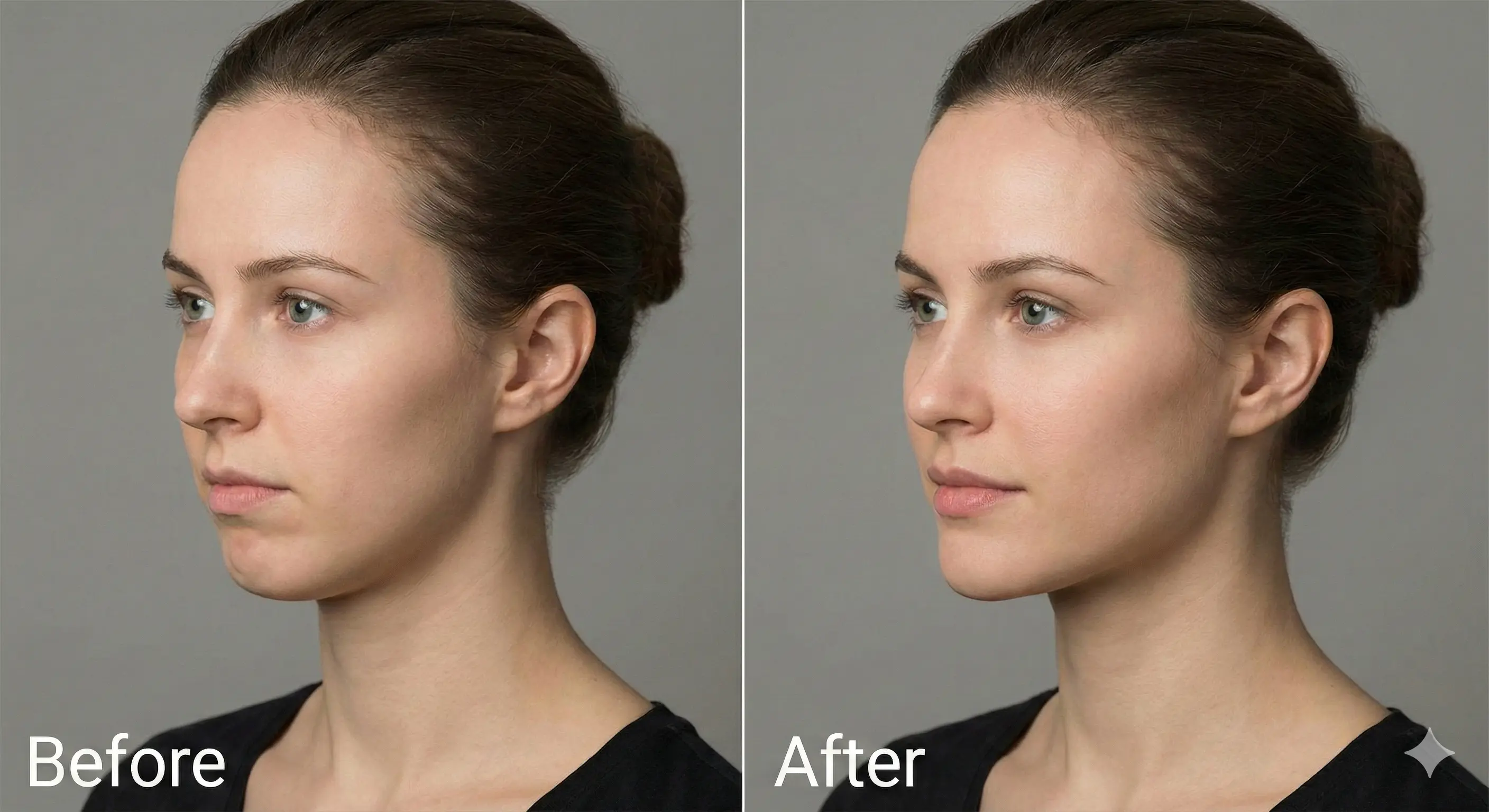 Do Braces Change Your Jawline? What Actually Happens to Your Face
You've probably scrolled through countless before-and-after photos online, wondering if braces could really transform your jawline. Maybe you're considering orthodontic treatment, but there's this nagging fear: What if my face looks worse afterward? Or perhaps you've heard someone say braces gave them a "weak chin," and now you're second-guessing everything.
Here's the thing — you're not alone in this confusion. The internet is flooded with conflicting information about braces and facial changes. Some people swear their jawline became more defined, while others worry about looking different in ways they didn't expect. And if you've ever noticed your face looks different in photos versus the mirror, you know how tricky it can be to assess your own appearance objectively.
Before diving in, it helps to understand what facial symmetry actually means and why it matters for overall facial harmony. And if you're curious about your current facial balance, our Face Symmetry Test can help you assess where you stand before taking the next step toward orthodontic treatment.
How Do Braces Actually Affect Your Jaw?
Let's clear up the biggest misconception first: braces themselves don't move your jawbone. What they do is move your teeth through a process called bone remodeling. When orthodontic pressure is applied to your teeth through brackets and wires, it triggers changes in the periodontal ligament — the tissue connecting your teeth to the jawbone. Over time, this controlled pressure causes bone to break down on one side of the tooth and rebuild on the other, allowing teeth to shift into new positions.
So how does this translate to jawline changes? It's all about bite correction and facial harmony.
When your bite is misaligned, it affects how your entire face looks. An overbite can make your chin appear recessed or "weak." An underbite creates a protruding lower jaw that throws off facial proportions. A crossbite often causes noticeable facial asymmetry, where one side of your face looks different from the other — a common concern we address in our guide on how to fix uneven jawline.
By correcting these bite issues, braces indirectly change how your jawline appears. Your jaw doesn't physically move to a new location, but the relationship between your upper and lower teeth changes — and this affects your facial profile significantly.
The Hidden Culprit: One-Sided Chewing Habits
Here's something most people don't realize: if your bite is misaligned, you've probably been chewing predominantly on one side of your mouth for years. This unconscious habit develops because chewing feels more comfortable or efficient on one side when teeth don't meet properly.
The problem? One-sided chewing causes the muscles on that side to become more developed, while the other side weakens. Over time, this creates visible facial asymmetry — one side of your face may actually look fatter than the other. When braces correct your bite, you naturally start chewing more evenly, which can help rebalance your facial muscles over time.
Hardware vs. Strategy
Here's the key distinction that most articles miss: braces are the hardware, but your orthodontist's treatment plan is the strategy. A skilled orthodontist considers your facial aesthetics, not just your dental alignment. They can use elastics, headgear, or specific bracket placements to influence how your bite correction affects your overall appearance.
This is why two people with similar dental issues might see different facial results — the treatment approach matters enormously.
5 Key Ways Braces Change Your Jawline and Face Shape
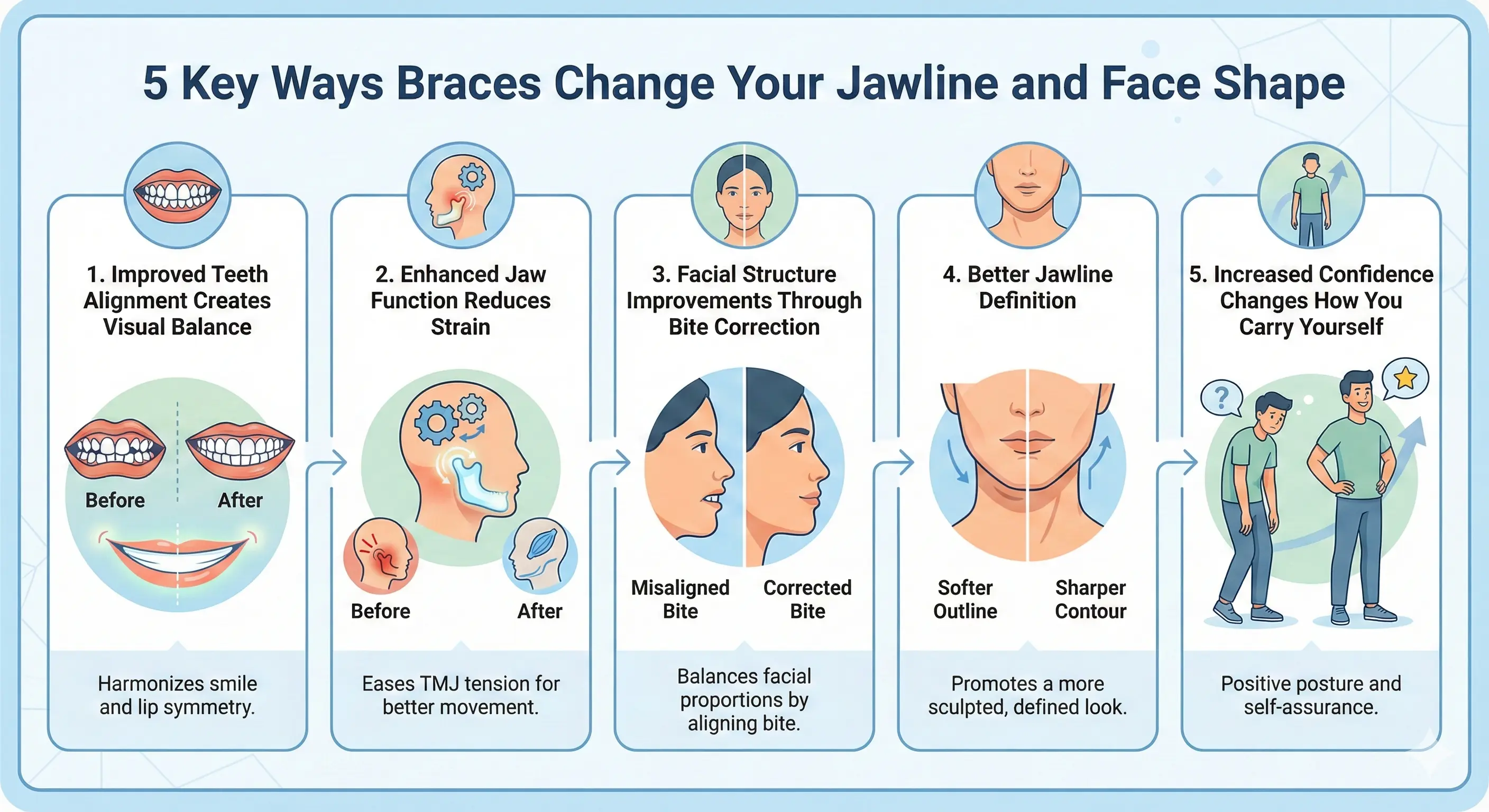 5 Key Ways Braces Change Your Jawline and Face Shape
1. Improved Teeth Alignment Creates Visual Balance
Crooked or crowded teeth create visual chaos that draws attention away from your natural facial structure. When braces straighten your teeth, they create a more uniform smile that allows your jawline to become a focal point. This isn't a physical change to your jaw — it's about how balanced alignment enhances your overall facial harmony.
Think of it like framing a picture. The same image looks completely different in a crooked frame versus a straight one. Your jawline has always been there; straight teeth just let it shine.
One aspect many patients don't expect is how much their smile can widen during treatment. Braces can expand the dental arch, especially when correcting crossbites or crowding, creating a broader, more balanced smile. As one Reddit user noted after sharing their 9-month progress:
"Your smile has widened nicely!!"
— u/thenessmiester on r/braces
This widening effect not only improves the smile itself but also creates better facial proportions, making the jawline appear more balanced from the front view.
2. Enhanced Jaw Function Reduces Strain
When your bite is off, your jaw muscles work overtime to compensate. This constant strain can cause muscle tension, puffiness, and even contribute to an uneven appearance. Braces correct the functional relationship between your upper and lower teeth, allowing your jaw muscles to relax.
Many patients notice their face looks "slimmer" or more defined after treatment — not because bone changed, but because muscle tension decreased. This is especially true for people who grind their teeth or clench their jaw due to malocclusion.
3. Facial Structure Improvements Through Bite Correction
This is where the real transformation happens. If you have a significant overbite, your lower jaw sits further back than it should, creating a recessed chin appearance. Braces with elastics can guide your lower jaw forward during treatment, dramatically improving your profile.
For underbites, the opposite occurs. Treatment brings the lower jaw back into proper alignment, creating a more balanced facial structure. These changes are most noticeable from the side profile — many patients are surprised by how different they look in photos taken from the side after treatment.
If you're dealing with an uneven jawline specifically, braces combined with proper orthodontic planning can address the underlying bite issues contributing to that asymmetry.
4. Better Jawline Definition
Here's something orthodontists don't always explain upfront: correcting your bite can make your jawline appear more defined. When teeth are properly aligned and your bite functions correctly, the soft tissue around your jaw settles into a more natural position.
Patients with overbites often see the most dramatic improvement here. As the bite corrects, the chin appears to "come forward," creating stronger jawline definition. It's not that your bone grew — it's that your jaw is now in its optimal position.
5. Increased Confidence Changes How You Carry Yourself
This might sound like a soft benefit, but it's backed by psychology research. When you feel good about your smile, you hold your head higher, make more eye contact, and project confidence. These postural changes actually affect how your jawline appears to others.
A confident posture elongates the neck and defines the jaw. So while braces don't directly change your bone structure through confidence, the downstream effects on your appearance are very real.
Curious where you stand right now? Take our Face Symmetry Test to get an objective assessment of your facial balance before starting any treatment.
Braces and Jawline: Teens vs. Adults — What to Expect
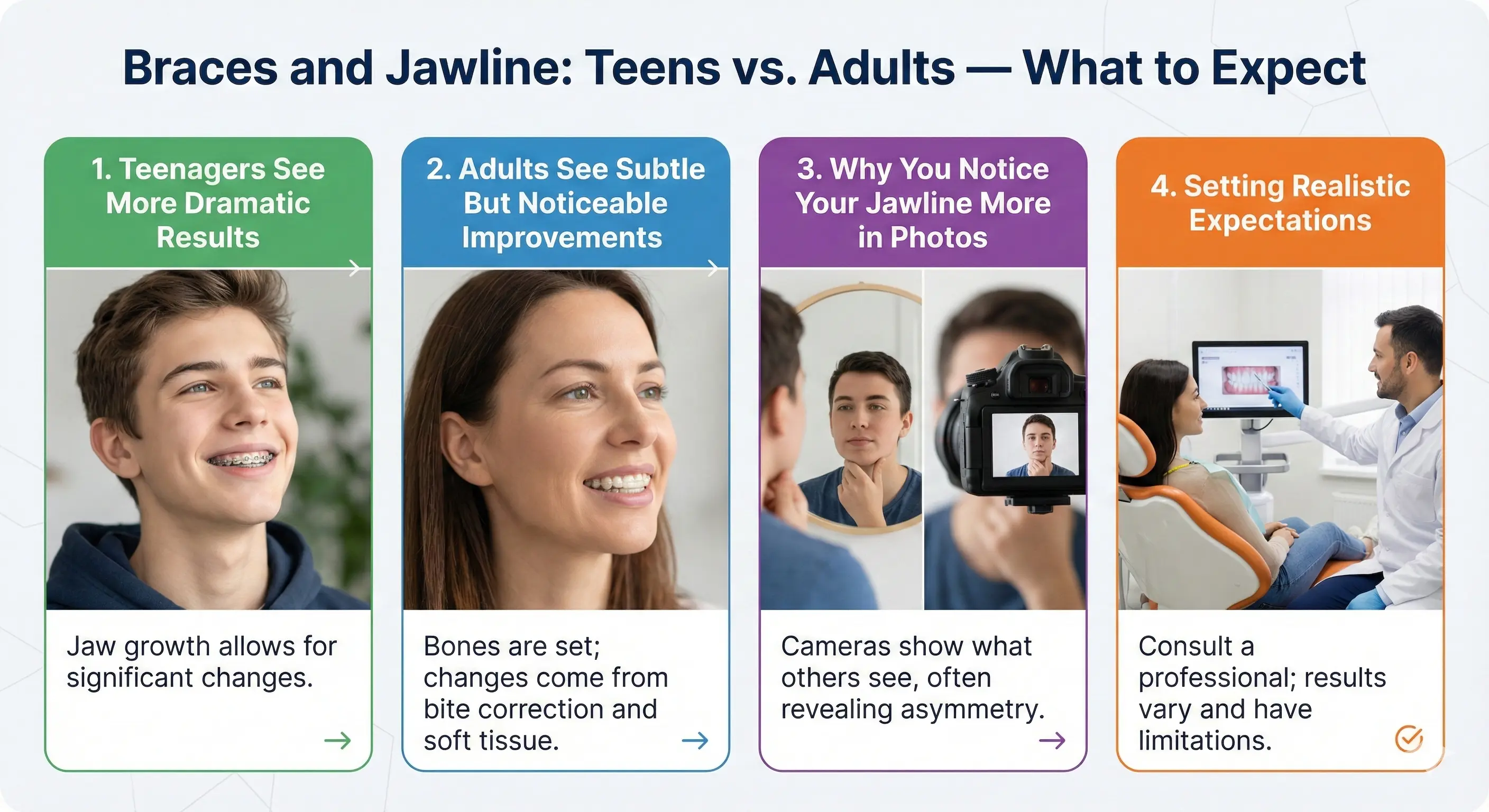 Braces and Jawline: Teens vs. Adults — What to Expect
One of the most important factors in how much braces will change your jawline is your age. Here's why it matters:
Braces and Jawline: Teens vs. Adults — What to Expect
One of the most important factors in how much braces will change your jawline is your age. Here's why it matters:
Teenagers See More Dramatic Results
If you're under 18, your jaw is still growing. This means orthodontic treatment can actually influence jaw development, not just tooth position. Orthodontists can use this growth phase to guide the jaw into a more favorable position, creating changes that would be impossible in adults.
For teens with significant overbites or underbites, early treatment can produce remarkable facial transformations. The bone is still malleable, and the right treatment plan can shape how the jaw develops over the coming years.
Adults See Subtle But Noticeable Improvements
If you're an adult considering braces, here's the honest truth: your bones are set. You won't see the dramatic skeletal changes that teenagers experience. However, that doesn't mean braces won't change your appearance.
Adult patients consistently report improved facial harmony after treatment. The changes are more subtle — a slightly more defined profile, reduced facial asymmetry, better overall balance. These improvements come primarily from bite correction and soft tissue adaptation rather than bone growth.
Research shows that adult orthodontic treatment typically takes 18-24 months, and facial changes become noticeable around the halfway point. The soft tissue around your jaw adapts to the new tooth positions, creating a refined appearance even though the underlying bone hasn't moved.
Why You Notice Your Jawline More in Photos
Here's an interesting phenomenon: many people first become concerned about their jawline after seeing themselves in photographs. You might look fine in the mirror every morning, but then a candid photo makes you cringe.
This isn't your imagination. Mirrors and cameras show your face differently — mirrors show a flipped image that you're accustomed to, while cameras capture what others actually see. Additionally, camera lenses can distort facial proportions depending on the focal length and distance.
If photos are what triggered your interest in braces, understand that some of what you're seeing may be photographic distortion rather than actual asymmetry. That said, if you have a genuine bite issue, correcting it will improve how you look in both mirrors and photos.
Setting Realistic Expectations
Whether you're a teen or adult, it's crucial to have realistic expectations. Braces can improve your facial harmony and jawline definition, but they're not a replacement for jaw surgery if you have severe skeletal discrepancies.
If your orthodontist mentions that surgery might be necessary for optimal results, take that seriously. Braces alone have limitations, and understanding those boundaries helps you make informed decisions about your treatment. For a comprehensive look at both surgical and non-surgical options, check out our guide on how to fix face asymmetry.
Braces Before and After Jawline: Real Stories
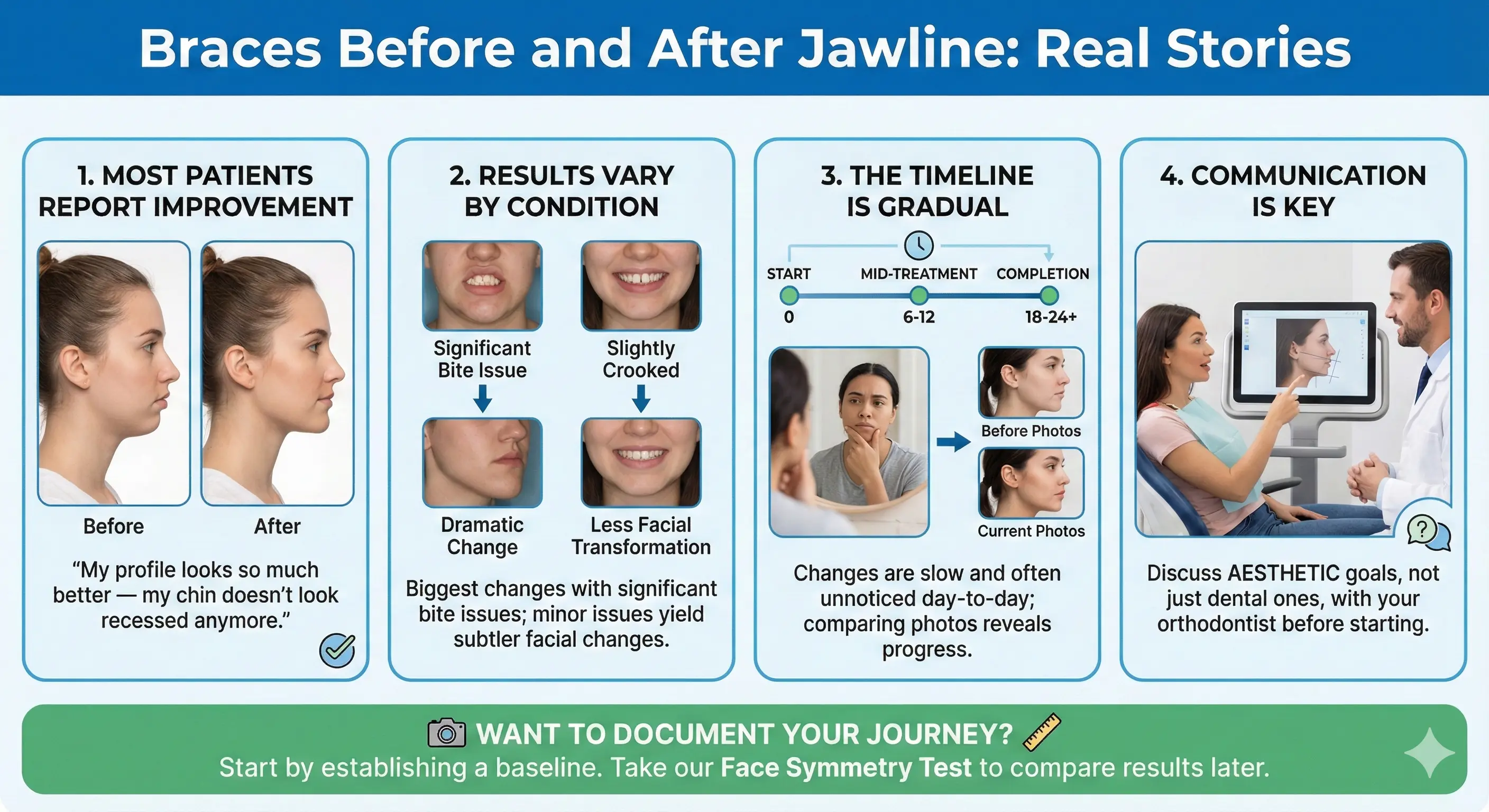 Braces Before and After Jawline: Real Stories
What do real patients experience? Based on community discussions and patient testimonials, here are the common themes:
Braces Before and After Jawline: Real Stories
What do real patients experience? Based on community discussions and patient testimonials, here are the common themes:
Real Reddit Discussion: Does Your Jaw Actually Move?
One of the most common questions people ask before getting braces is whether their jaw position will actually change. Here's a real exchange from the r/braces community that captures this concern perfectly:
Q: "Please please answer what happened to your jaw and chin after like did it pull it back or forwards or the same? I really need to know"
A: "My jaw now sits slightly more forward"
This exchange highlights what many patients with overbites experience: when the bite is corrected, the lower jaw naturally settles into a more forward position, creating better facial balance and a stronger profile.
Positive experiences are the majority. Most patients report that their facial appearance improved after braces. Common feedback includes:
- "My profile looks so much better — my chin doesn't look recessed anymore"
- "I didn't realize how much my overbite affected my face until it was fixed"
- "My jawline is more defined now, and I wasn't even expecting that"
Results vary based on starting condition. Patients with significant bite issues see the most dramatic changes. If your teeth were only slightly crooked and your bite was already good, don't expect major facial transformation — you'll get straighter teeth, but your face won't change much.
The timeline surprises people. Many patients expect instant results, but facial changes from braces are gradual. Some people don't notice changes until they compare photos from before treatment to current ones. The day-to-day changes are too subtle to perceive.
Mixed feelings happen too. A small percentage of patients feel their face looks "different" in ways they didn't anticipate. This is why communication with your orthodontist about aesthetic goals — not just dental goals — is so important before starting treatment.
Want to document your own journey? You can compare your results after treatment to see exactly how your facial balance has improved.
3 Myths About Braces and Jawline Changes
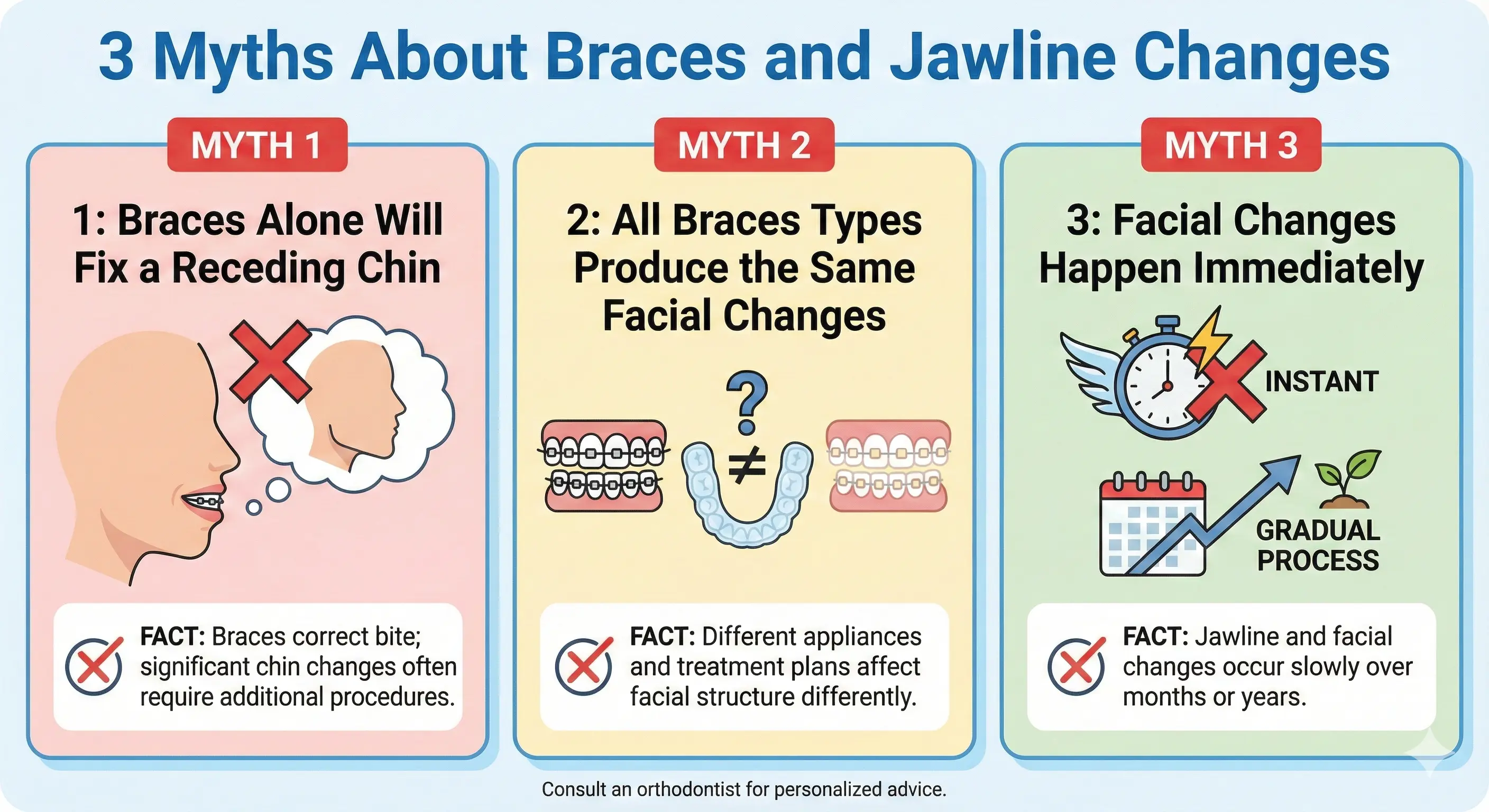 3 Myths About Braces and Jawline Changes
Myth 1: Braces Alone Will Fix a Receding Chin
The Truth: If you have a severe skeletal discrepancy — meaning your jawbone itself is significantly underdeveloped — braces alone cannot fix this. Braces move teeth; they don't grow bone.
For severe cases, orthognathic surgery (jaw surgery) combined with orthodontic treatment is the gold standard. Braces can camouflage mild skeletal issues, but there's a limit to what tooth movement can achieve. Our detailed guide on fixing face asymmetry covers both non-surgical and surgical options if you're exploring all possibilities.
Myth 2: All Braces Types Produce the Same Facial Changes
The Truth: Traditional metal braces and clear aligners like Invisalign work differently and have different capabilities.
Traditional braces with elastics can exert forces that influence jaw positioning more effectively than clear aligners alone. If your treatment goals include correcting a significant bite issue that affects your facial appearance, discuss which option gives you the best chance of achieving those results.
That said, for purely cosmetic tooth straightening where your bite is already functional, clear aligners can produce excellent results with minimal facial change.
Myth 3: Facial Changes Happen Immediately
The Truth: Bone remodeling is a slow process. Your teeth move approximately 1mm per month under orthodontic pressure. Facial changes follow this same gradual timeline.
Most patients don't notice significant facial differences until 12+ months into treatment. Full results aren't visible until treatment is complete and your teeth have settled into their final positions. Patience is essential — trust the process.
Lifestyle Tips During Orthodontic Treatment
While braces do the heavy lifting for your bite correction, certain lifestyle habits can enhance your results and support a more defined jawline:
Mind Your Facial Fat
Your jawline definition depends partly on the amount of fat around your face. If you're carrying extra facial fat, even perfect teeth alignment won't give you a chiseled jawline. Consider incorporating habits that support overall facial fat reduction — staying hydrated, reducing sodium intake, and maintaining a healthy body composition.
That said, don't try to lose weight drastically during orthodontic treatment. Your body needs proper nutrition to support the bone remodeling process.
Break the One-Sided Chewing Habit
Once your braces start correcting your bite, consciously practice chewing on both sides of your mouth. This helps rebalance the facial muscles that may have become uneven from years of favoring one side.
Maintain Good Posture
Forward head posture can make your jawline appear weaker and contribute to neck tension. Practice keeping your head aligned over your shoulders, especially if you spend long hours at a computer. Good posture complements the facial improvements from orthodontic treatment.
Stay Consistent with Your Treatment
This sounds obvious, but it matters: wear your elastics as prescribed, attend all adjustment appointments, and follow your orthodontist's instructions. Inconsistent compliance extends treatment time and can compromise your results.
Your Next Steps: Should You Get Braces for Jawline Improvement?
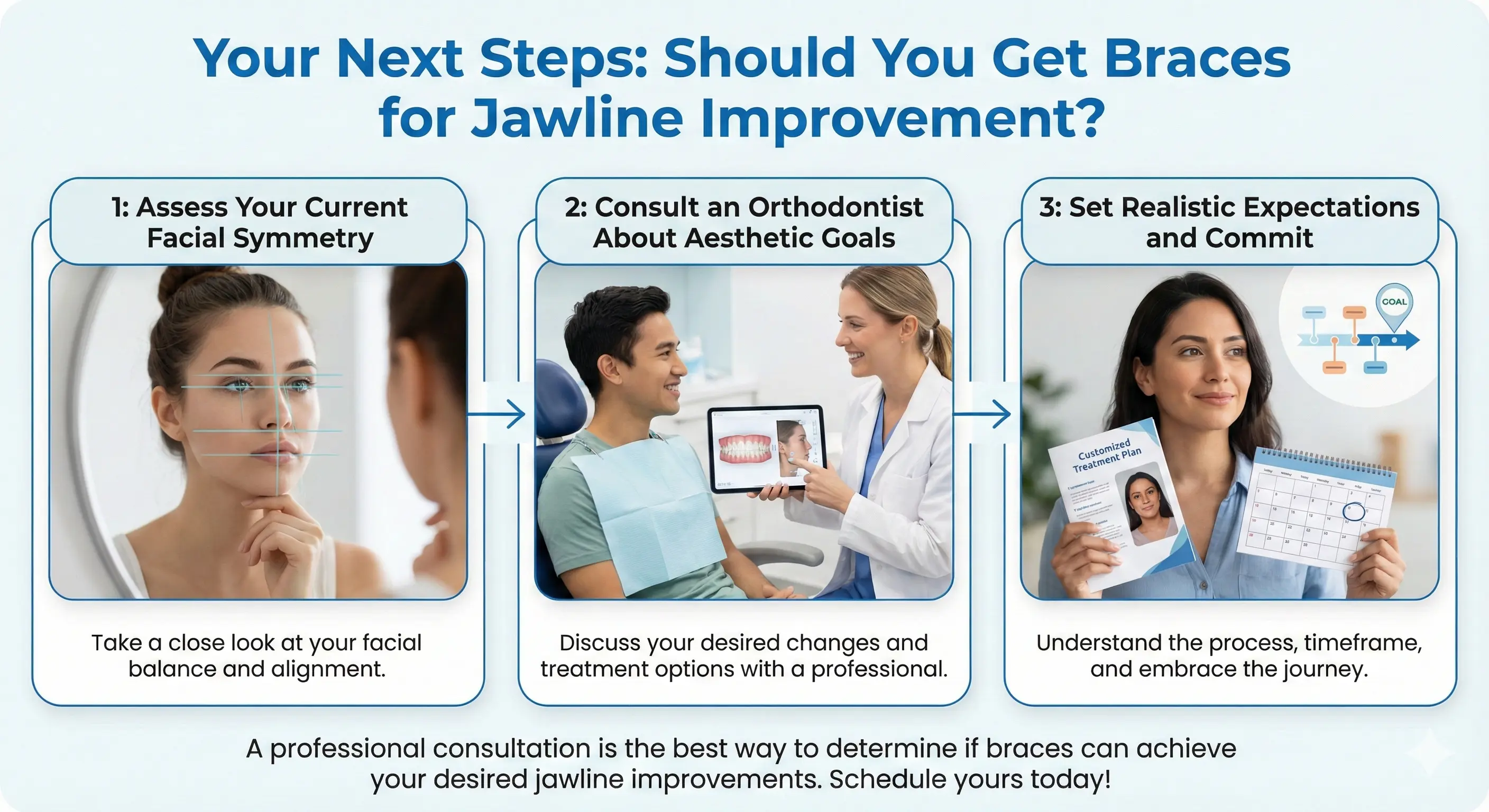 Your Next Steps: Should You Get Braces for Jawline Improvement?
If you're considering braces partly for aesthetic reasons, here's your action plan:
Step 1: Assess Your Current Facial Symmetry
Before consulting an orthodontist, understand where you're starting from. Use our Face Symmetry Test to analyze your current facial balance. This gives you objective data about any asymmetry and helps you articulate your concerns to a professional.
Look at photos of yourself from different angles — especially profile shots. Identify what specifically bothers you. Is it your chin position? Overall facial balance? Jawline definition? If it's specifically about an uneven jawline, that article provides targeted guidance.
Step 2: Consult an Orthodontist About Aesthetic Goals
When you meet with an orthodontist, don't just talk about straight teeth. Discuss your facial appearance goals explicitly. A good orthodontist will consider your facial aesthetics in their treatment plan, not just your dental alignment.
Ask questions like:
- "Based on my bite, what facial changes can I expect?"
- "Would traditional braces or clear aligners be better for my aesthetic goals?"
- "Are there any limitations to what orthodontic treatment can achieve for my face?"
Step 3: Set Realistic Expectations and Commit
Understand that orthodontic treatment is a marathon, not a sprint. Plan for 18-24 months of treatment. The facial changes will be gradual — some patients don't fully appreciate the transformation until they compare their before photos to their final results.
What to expect:
- Improved facial harmony within 12-18 months
- Better profile view as bite corrects
- Enhanced jawline definition, especially if you have a significant overbite
- Full results visible 3-6 months after braces removal as teeth settle
FAQ
Do braces change your face shape permanently?
Yes, to some extent. Braces correct your bite alignment, which can permanently improve your facial profile and jawline appearance. However, the changes are primarily related to tooth position and soft tissue adaptation. Your underlying bone structure remains largely the same unless you have jaw surgery.
Can braces fix a weak chin?
Braces can improve the appearance of a weak chin if it's caused by an overbite pushing your lower jaw back. By correcting the bite, your chin can appear more projected. However, if your chin bone is genuinely underdeveloped (skeletal issue), braces alone won't fix it — you may need additional procedures.
Will my jawline get worse with braces?
In most cases, no. Braces typically improve facial harmony by correcting bite issues. However, some patients feel their face looks "different" during treatment as teeth shift. This is usually temporary. Communicate your aesthetic concerns with your orthodontist before starting treatment.
How long until I see jawline changes from braces?
Most patients notice subtle facial changes around 6-12 months into treatment. Significant jawline improvements typically become apparent after 12-18 months. Full results are visible 3-6 months after braces removal once teeth settle into their final positions.
Are clear aligners as effective as traditional braces for changing jawline?
Traditional braces with elastics generally offer more control over jaw positioning than clear aligners. If your primary goal is jawline improvement through bite correction, traditional braces may be more effective. Discuss your specific goals with your orthodontist to determine the best option.
📖 This article is part of our Complete Guide to Face Symmetry
The Bottom Line on Braces and Your Jawline
So, do braces change your jawline? Yes — but not in the way most people assume. Braces don't physically move your jawbone. Instead, they correct your bite, improve tooth alignment, and allow your facial soft tissue to settle into a more harmonious position. The result is often a more defined, balanced appearance that enhances your natural features.
The biggest transformations happen for patients with significant bite issues, and teenagers see more dramatic results than adults due to ongoing jaw growth. But even adult patients consistently report improved facial harmony after completing treatment. Combined with addressing habits like one-sided chewing and maintaining good posture, orthodontic treatment can genuinely improve how your jawline looks.
If you're on the fence about braces, start by understanding your current facial balance. Take our Face Symmetry Test to see where you stand, then schedule a consultation with an orthodontist to discuss your specific goals. The journey to a better smile — and potentially a more defined jawline — begins with that first step.