
Does Alcohol Make Your Face Puffy? The Science + 5 Ways to De-Bloat Fast
 Does Alcohol Make Your Face Puffy
You had a few drinks last night. Maybe it was a celebration, a stressful day, or just a casual Friday. But this morning, you barely recognize the person staring back at you in the mirror.
Does Alcohol Make Your Face Puffy
You had a few drinks last night. Maybe it was a celebration, a stressful day, or just a casual Friday. But this morning, you barely recognize the person staring back at you in the mirror.
Your face looks swollen. Your eyes seem smaller. Your jawline? Gone. And somehow, one side of your face looks puffier than the other.
You're not imagining it. Alcohol-induced facial puffiness is real, and it happens to nearly everyone who drinks—even in moderation.
Here's the frustrating part: most advice online tells you to "just drink less." Helpful, right? But what if you want to understand why your face balloons after drinking, and more importantly, what actually works to reduce the puffiness fast?
That's exactly what we'll cover. In this guide, you'll learn the science behind alcohol face bloat, discover 5 evidence-based strategies to de-bloat quickly, and understand the common mistakes that make puffiness worse.
Part 1: Why Alcohol Makes Your Face Puffy (The Science You Need to Know)
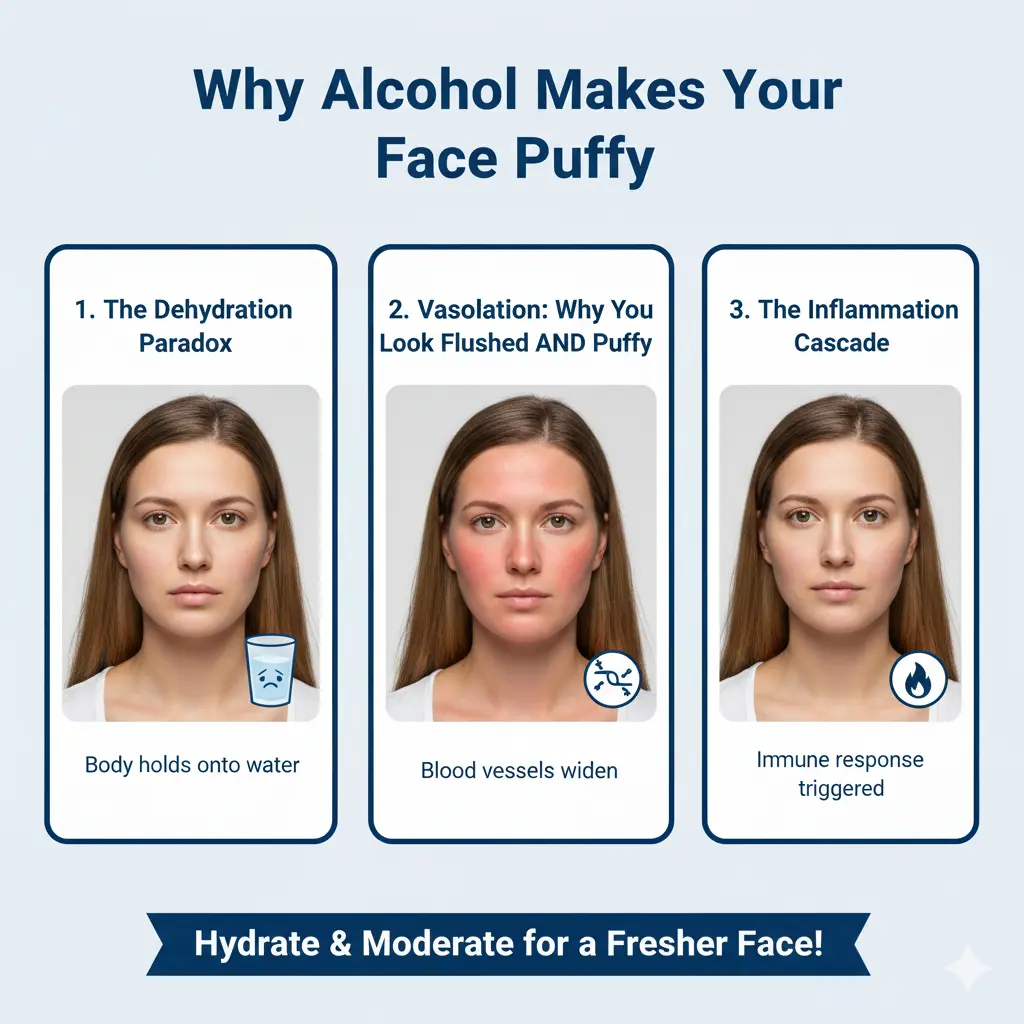 Why Alcohol Makes Your Face Puffy
Let's get one thing straight: alcohol doesn't just make you dehydrated. It creates a paradox in your body that leads directly to facial swelling.
Why Alcohol Makes Your Face Puffy
Let's get one thing straight: alcohol doesn't just make you dehydrated. It creates a paradox in your body that leads directly to facial swelling.
The Dehydration Paradox
Here's what most people get wrong: they think dehydration means less water everywhere. But alcohol triggers a specific chain reaction that causes your body to hold onto water in all the wrong places—especially your face.
How it works:
-
ADH Suppression: Alcohol blocks antidiuretic hormone (ADH), which normally tells your kidneys to retain water. Without ADH, you urinate more frequently, losing fluids rapidly.
-
Cellular Panic Mode: When your body senses this rapid fluid loss, it goes into conservation mode. Your cells start hoarding water to protect vital functions.
-
Facial Fluid Accumulation: The loose connective tissue in your face—especially around your eyes, cheeks, and jawline—becomes a storage depot for this retained water.
The result? You're technically dehydrated internally, but your face is swimming in excess fluid. This is why drinking more water alone doesn't instantly fix the problem.
Vasodilation: Why You Look Flushed AND Puffy
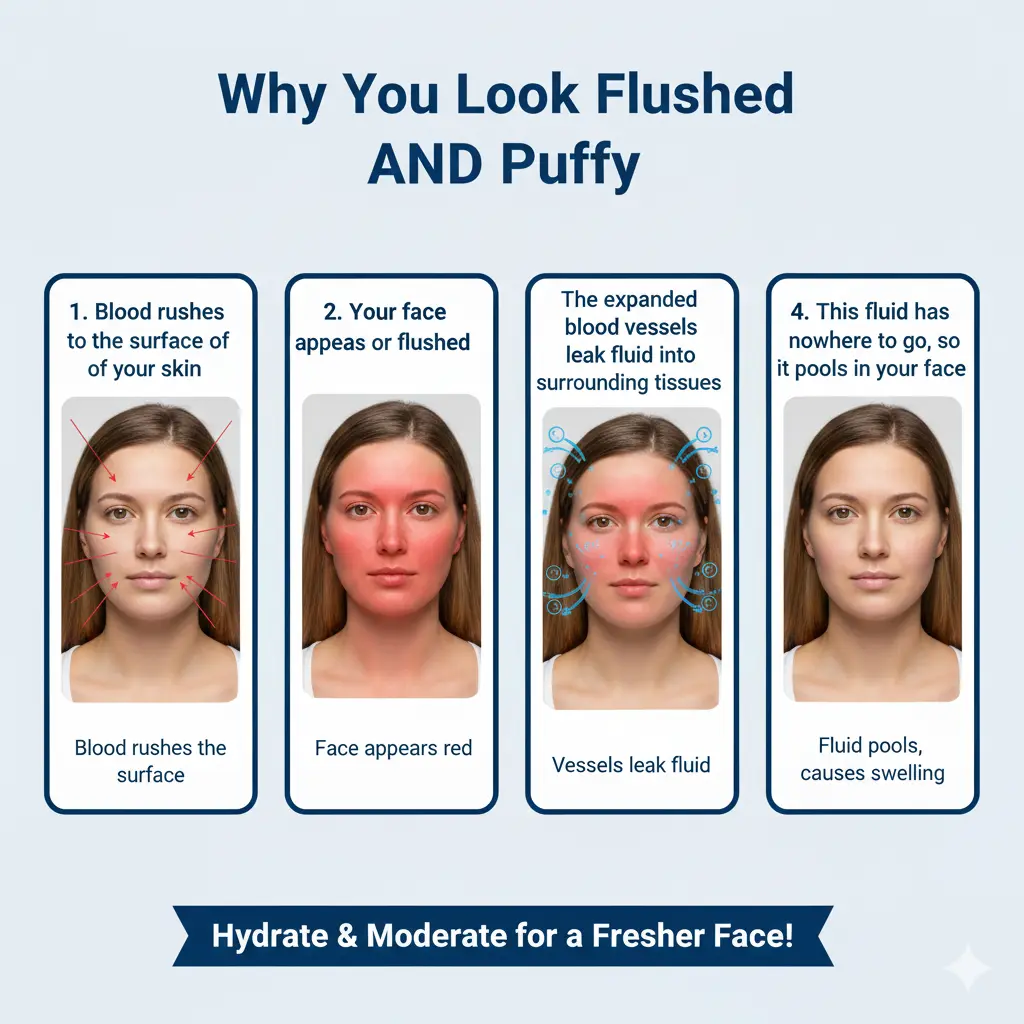 Why You Look Flushed AND Puffy
Alcohol is a vasodilator, meaning it causes your blood vessels to expand. This happens within minutes of your first sip.
Why You Look Flushed AND Puffy
Alcohol is a vasodilator, meaning it causes your blood vessels to expand. This happens within minutes of your first sip.
What this means for your face:
- Blood rushes to the surface of your skin
- Your face appears red or flushed
- The expanded blood vessels leak fluid into surrounding tissues
- This fluid has nowhere to go, so it pools in your face
Research shows that vasodilation effects can last 12-24 hours after drinking, depending on how much you consumed.
The Inflammation Cascade
Alcohol triggers an inflammatory response in your body. When you drink, your liver prioritizes metabolizing alcohol over its normal functions, releasing inflammatory cytokines in the process.
The inflammation timeline:
- Hours 1-4: Vasodilation and initial fluid shift begin
- Hours 4-8: Inflammatory markers peak as your liver works overtime
- Hours 8-24: Fluid accumulates in facial tissues
- Hours 24-72: Gradual reduction as inflammation subsides
This explains why you might look worse the morning after drinking than you did right before bed.
### Why Some Faces Puff More Than OthersNot everyone experiences the same level of facial bloating. Several factors determine how puffy you'll get:
- Genetics: Some people naturally have more permeable blood vessels
- Age: Skin elasticity decreases over time, making fluid retention more visible
- Salt intake: High-sodium foods with alcohol dramatically increase puffiness
- Sleep position: Lying flat allows more fluid to pool in your face
- Baseline hydration: Already dehydrated? The effect is amplified
Interestingly, facial puffiness often appears asymmetrical. If you've noticed one side of your face looks more swollen than the other, this is common. Sleeping on one side, for example, can cause more fluid to accumulate there. Learn more about the causes of asymmetrical facial puffiness and what it means for your face.
Part 2: 5 Evidence-Based Strategies to De-Bloat Your Face Fast
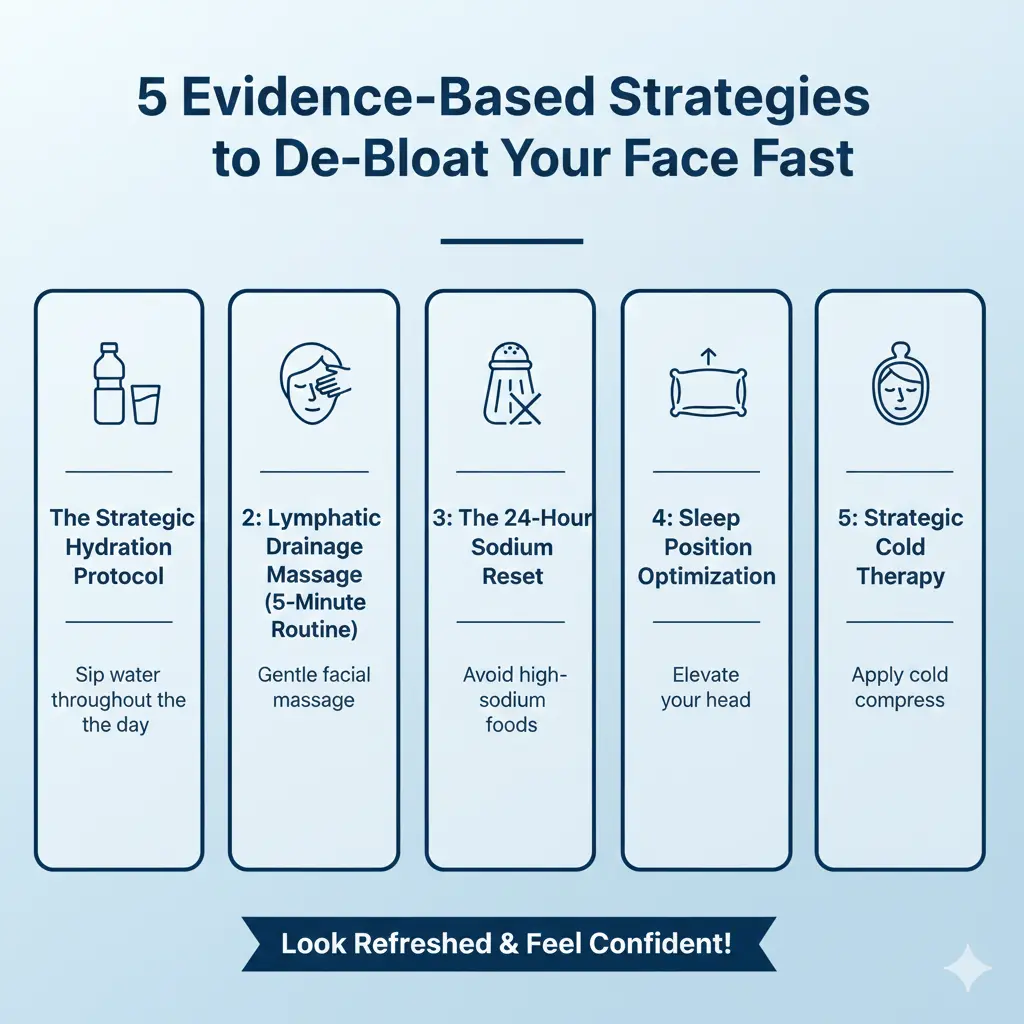 5 Evidence-Based Strategies to De-Bloat Your Face Fast
Now that you understand why your face puffs up, let's talk about what actually works to reverse it.
5 Evidence-Based Strategies to De-Bloat Your Face Fast
Now that you understand why your face puffs up, let's talk about what actually works to reverse it.
Strategy 1: The Strategic Hydration Protocol
Counterintuitive as it sounds, drinking more water is essential—but how you hydrate matters.
The method:
- Morning: Drink 16-20 oz of room temperature water within 30 minutes of waking
- Add electrolytes: A pinch of sea salt or electrolyte powder helps your cells actually absorb the water instead of flushing it out
- Avoid: Ice-cold water (slows digestion) and excessive caffeine (more dehydration)
Why it works: Proper hydration signals your body that the "emergency" is over, allowing it to release stored fluid from your tissues.
Strategy 2: Lymphatic Drainage Massage (5-Minute Routine)
Your lymphatic system is responsible for draining excess fluid from your face. Unlike your circulatory system, it doesn't have a pump—it relies on movement and manual stimulation.
The technique:
- Start at your neck: Using light pressure, stroke downward from behind your ears to your collarbone (10 strokes each side)
- Cheeks: Place fingers at the center of your face, sweep outward toward your ears (10 strokes)
- Under eyes: Gently tap from inner corner to outer corner, then sweep down toward your ears
- Jawline: Use your knuckles to massage from chin to ears, applying gentle upward pressure
- Finish at neck: Repeat the downward strokes to "drain" the fluid you've moved
Pro tip: Do this while applying a cold serum or moisturizer for enhanced results. The cold constricts blood vessels while the massage moves fluid.
For a complete breakdown of lymphatic massage techniques and other proven methods, check out our comprehensive guide on how to decrease face fat.
Strategy 3: The 24-Hour Sodium Reset
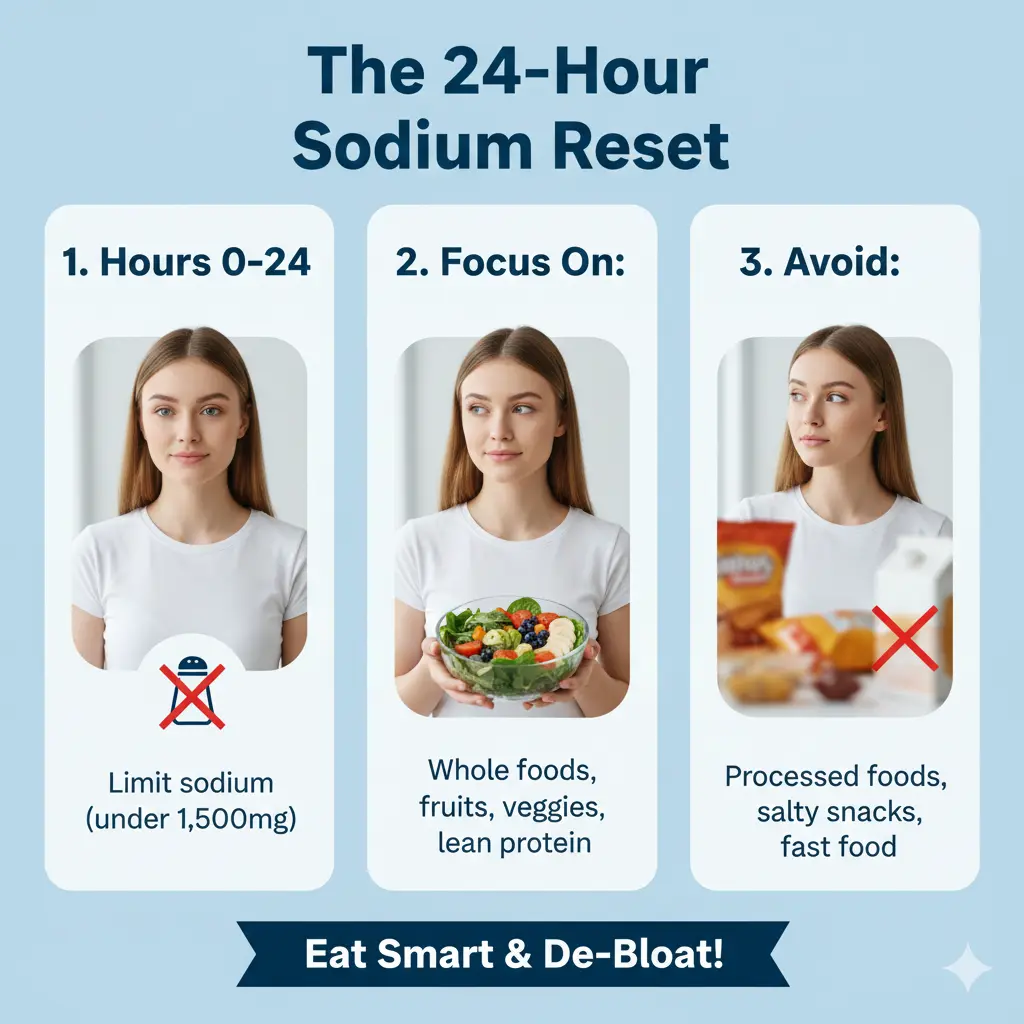 The 24-Hour Sodium Reset
Salt makes everything worse when it comes to facial puffiness. After drinking, your body is already retaining water—adding sodium is like pouring gasoline on a fire.
The 24-Hour Sodium Reset
Salt makes everything worse when it comes to facial puffiness. After drinking, your body is already retaining water—adding sodium is like pouring gasoline on a fire.
The protocol:
- Hours 0-24 after drinking: Keep sodium under 1,500mg (half the typical daily intake)
- Focus on: Fresh vegetables, fruits, lean proteins, and potassium-rich foods (bananas, avocados, spinach)
- Avoid: Processed foods, restaurant meals, soy sauce, chips, cured meats
The science: Potassium helps balance sodium levels and encourages your kidneys to release excess water. This is why many "hangover cures" include bananas or coconut water.
Strategy 4: Sleep Position Optimization
Where fluid goes in your body is heavily influenced by gravity. If you sleep flat on your back (or worse, face-down), fluid pools in your face overnight.
The fix:
- Elevate your head: Use an extra pillow or a wedge pillow to create a 15-30 degree incline
- Sleep on your back: This prevents fluid from accumulating on one side of your face
- Cool your room: Lower temperatures reduce inflammation and vasodilation
This simple change can reduce morning puffiness by up to 40%, according to dermatological observations.
Strategy 5: Strategic Cold Therapy
Cold exposure constricts blood vessels and reduces inflammation. This is why the "cold spoons on eyes" trick exists—but there are more effective methods.
Options from most to least effective:
- Ice roller or cryo globe: Roll across face for 2-3 minutes
- Cold compress: Wrap ice in a cloth, apply to puffy areas for 30 seconds at a time
- Cold water splash: The classic morning routine—10-15 splashes of very cold water
- Refrigerated products: Store your eye cream or serum in the fridge
Timing matters: Cold therapy works best in the morning when puffiness is at its peak. It provides immediate but temporary relief—combine with other strategies for lasting results.
Part 3: What Real Recovery Looks Like (A 72-Hour Timeline)
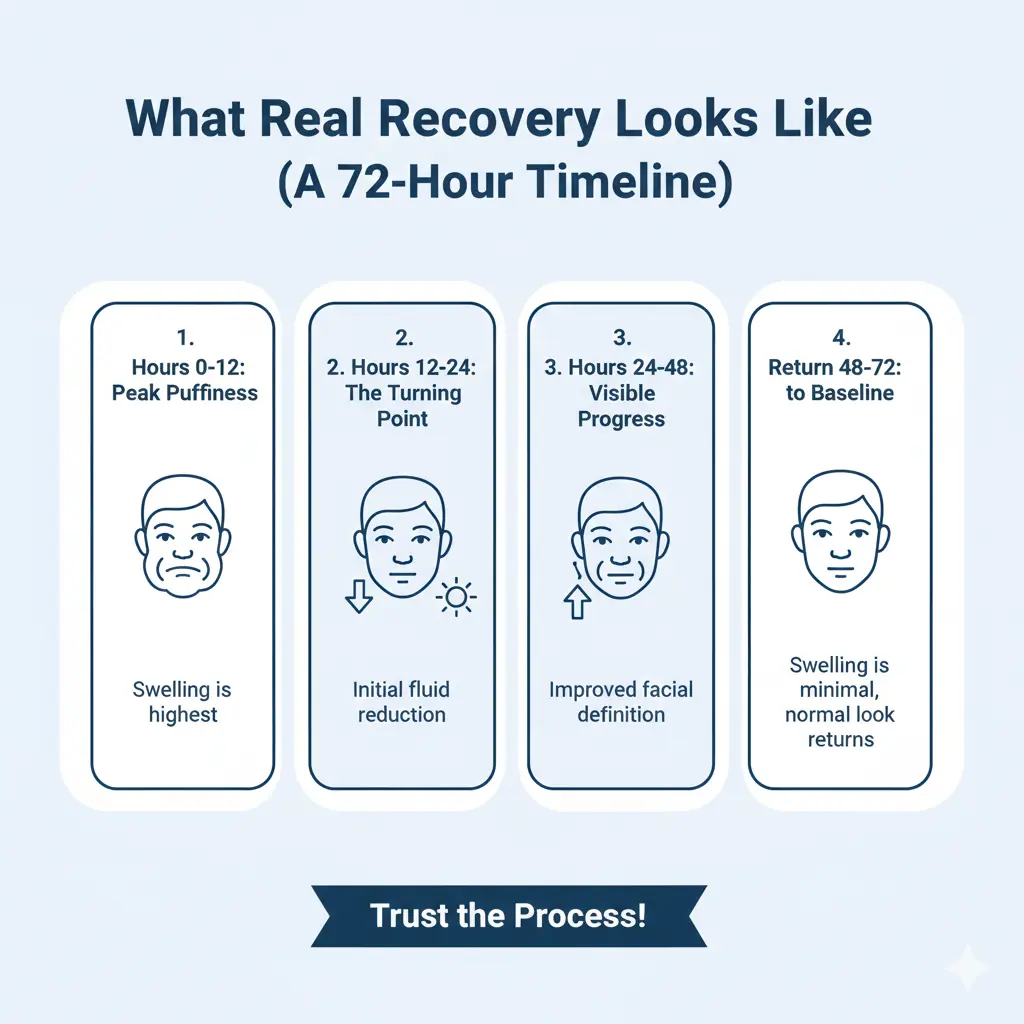 What Real Recovery Looks Like (A 72-Hour Timeline)
Understanding what to expect helps you stay patient and consistent. Here's what typically happens as your face recovers from alcohol-induced puffiness:
What Real Recovery Looks Like (A 72-Hour Timeline)
Understanding what to expect helps you stay patient and consistent. Here's what typically happens as your face recovers from alcohol-induced puffiness:
Hours 0-12: Peak Puffiness
This is when you look and feel the worst. Your face may appear 10-15% larger than normal, especially around the eyes and jawline.
What's happening: Inflammation is at its peak. Your body is still metabolizing alcohol and hasn't begun the recovery process.
What to do: Focus on hydration and avoid salty foods. Don't panic—this is temporary.
Hours 12-24: The Turning Point
You'll start to see slight improvement, especially if you've been hydrating properly. The redness usually fades first, followed by gradual reduction in swelling.
What's happening: Your liver has processed most of the alcohol. Inflammatory markers begin to drop.
What to do: Continue hydration, add lymphatic massage, keep sodium low.
Hours 24-48: Visible Progress
Most people see significant improvement by this point. Your jawline starts to reappear, and eye puffiness diminishes.
What's happening: Your kidneys are releasing the stored water. Normal fluid balance is being restored.
What to do: Maintain the protocol. Consider tracking your facial symmetry to measure progress.
Hours 48-72: Return to Baseline
For most people, facial appearance returns to normal within 72 hours—assuming no additional drinking and proper recovery protocols.
What's happening: Inflammation has fully subsided. Cellular hydration is normalized.
Long-term note: Frequent drinking can extend recovery time and eventually cause permanent changes to facial appearance. This is why moderation matters.
As one Reddit user explained how stopping drinking helped her:
Not only did my puffy face go away, but so did the circles under my eyes. Add in that I actually have a basic skin care routine now instead of a booze routine, my face looks so much better. My diet has cleaned up and so has my skin. During the first few months after I stopped drinking people would ask if I lost weight. Honestly I hadn’t, my face just leaned out and I lost my puffy face. The weight loss came gradually over the first year and ramped up after my first sober year. 195 down to 175. - r/stopdrinking
Part 4: 3 Common Mistakes That Make Puffiness Worse
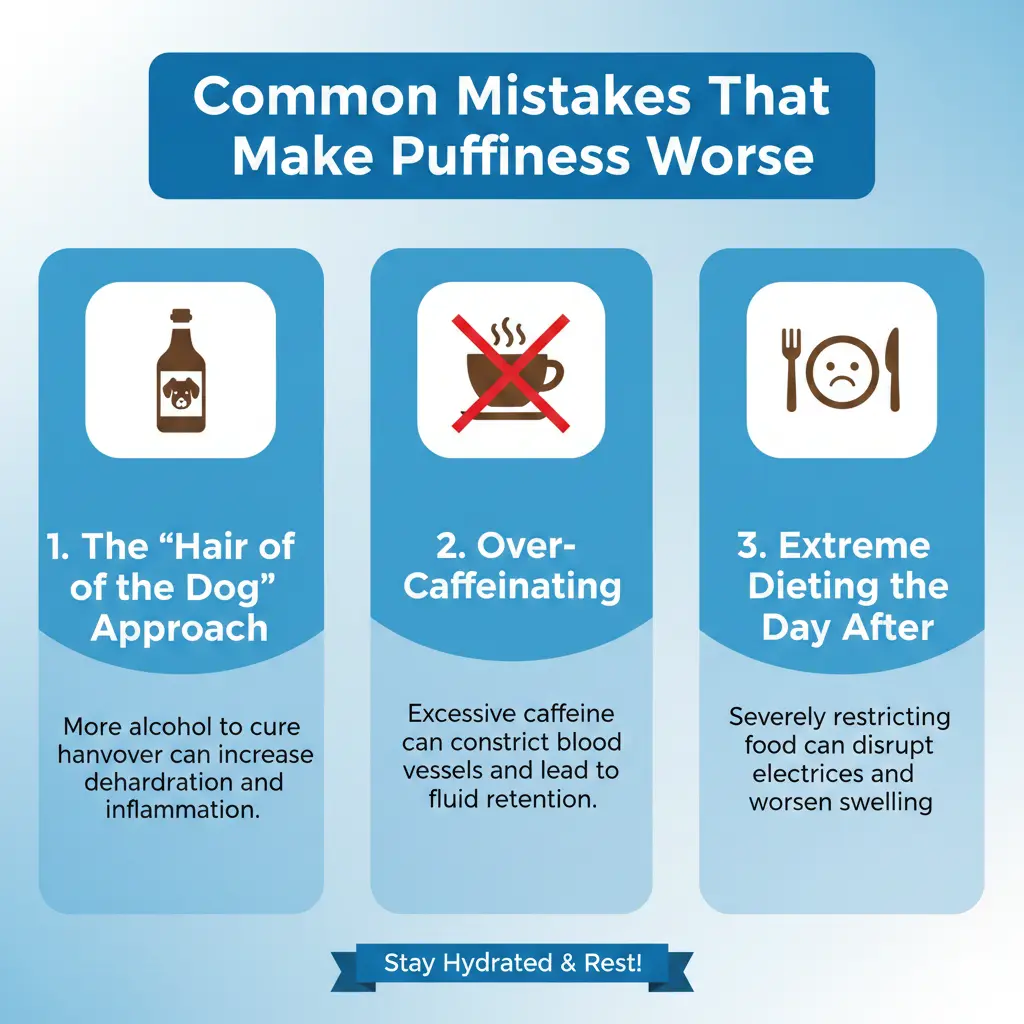 3 Common Mistakes That Make Puffiness Worse
Even well-intentioned efforts can backfire. Here are the mistakes that keep people looking puffy longer than necessary:
3 Common Mistakes That Make Puffiness Worse
Even well-intentioned efforts can backfire. Here are the mistakes that keep people looking puffy longer than necessary:
Mistake 1: The "Hair of the Dog" Approach
Some people believe drinking more alcohol will cure their hangover and associated puffiness. This is completely wrong.
Why it fails: You're adding more vasodilating, inflammatory, dehydrating alcohol to a system that's already struggling. You might temporarily feel better (because alcohol numbs discomfort), but you're extending the inflammation cycle by 24+ hours.
What to do instead: Accept the discomfort and focus on actual recovery. The only way out is through.
Mistake 2: Over-Caffeinating
Coffee seems like the obvious answer—it's a diuretic, so it should help flush water, right?
Why it fails: While caffeine does have mild diuretic effects, excessive coffee consumption:
- Further dehydrates you (worsening the paradox)
- Increases cortisol (another inflammatory trigger)
- Can cause rebound fluid retention
The balanced approach: One cup of coffee is fine. Pair it with water (2:1 water to coffee ratio). Avoid energy drinks entirely—the sugar and caffeine combination is counterproductive.
Mistake 3: Extreme Dieting the Day After
Some people try to "compensate" for drinking by eating very little the next day, thinking it will reduce bloating.
Why it fails: Your body needs nutrients to recover. Severe caloric restriction:
- Slows metabolism and fluid processing
- Depletes electrolytes further
- Can cause additional stress on your system
This is particularly important if you're also trying to manage your weight. Rapid caloric restriction combined with alcohol can lead to what's known as "Ozempic face"—losing facial volume and fat that makes you look older. Learn about protecting your facial appearance during weight loss.
What to do instead: Eat balanced meals with adequate protein, healthy fats, and potassium-rich vegetables. Focus on recovery, not restriction.
Your De-Bloat Action Plan: What to Do Right Now
Let's make this practical. Here's your step-by-step plan based on when you're reading this:
If You're Reading This the Morning After:
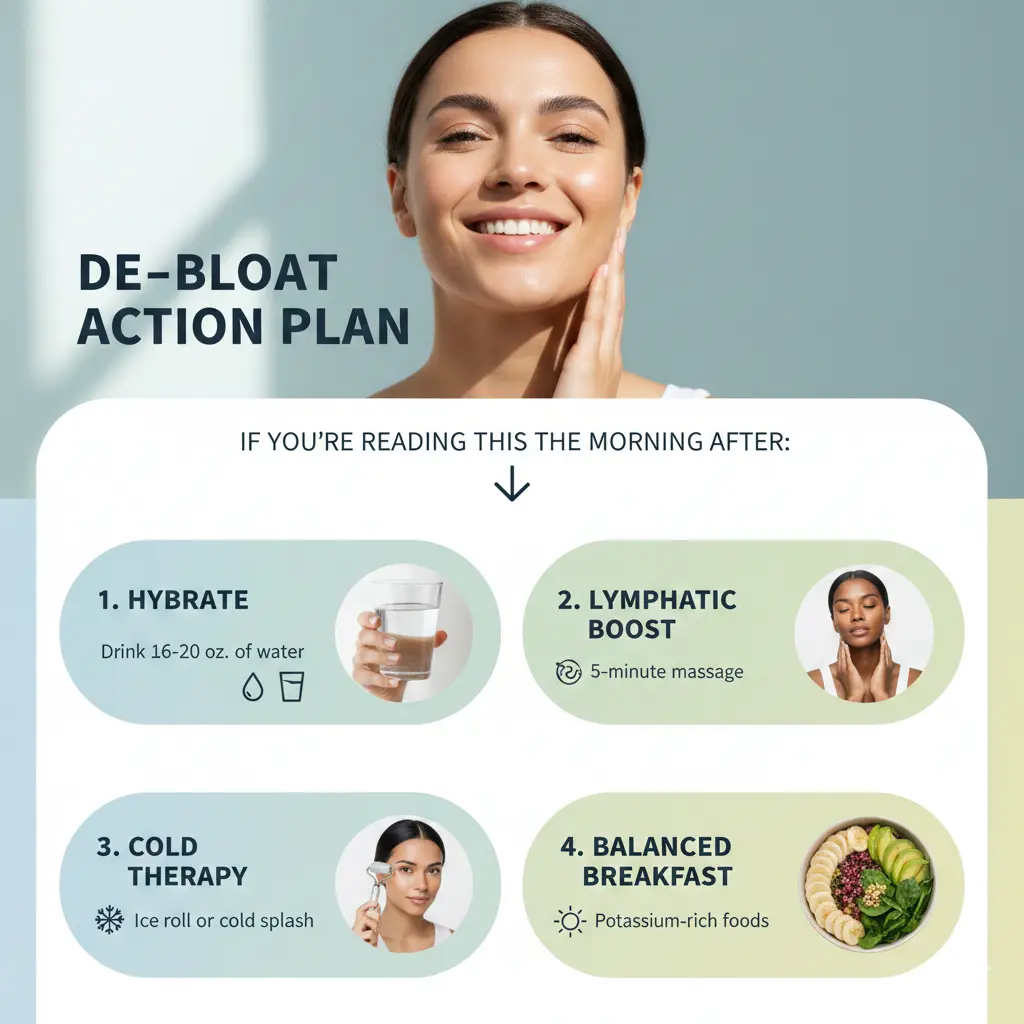 De-Bloat Action Plan in the Moring
- Immediately: Drink 16-20 oz of water with electrolytes
- Within 30 minutes: Do the 5-minute lymphatic drainage massage
- Apply cold therapy: Ice roller, cold compress, or cold water splashes
- Breakfast: Include potassium-rich foods (banana, avocado, spinach)
- Track your baseline: Take a Face Symmetry Test to measure current puffiness
You can also refer to advice shared by a Reddit user:
Keep some single-use sheet masks on hand! If you keep them refrigerated, even better. I don't drink, but after a super long hectic day or when I've been really stressed out or any intense period, a great way to de-puff and rejuvenate your face is a sheet mask. I specifically recommend a sheet mask because there isn't any intense clean up afterward like with a physical mask, and if it's refrigerated, it really helps with any puffiness or dullness. - r/beauty
If You Have a Big Event Coming Up:
- 48 hours before: Stop all alcohol consumption
- 24 hours before: Reduce sodium intake, increase potassium
- Night before: Sleep elevated, in a cool room
- Morning of: Full de-bloat protocol (hydration, massage, cold therapy)
If This Is a Recurring Problem:
Consider tracking your facial changes over time. Many people don't realize how much alcohol affects their appearance until they see the data.
Our Face Symmetry Test can help you measure and monitor:
- Baseline facial symmetry and balance
- Changes after drinking
- Recovery timeline for your specific face
- Long-term trends if you reduce alcohol consumption
📖 This article is part of our Complete Guide to Face Symmetry
Frequently Asked Questions
How long does alcohol puffiness last?
For most people, alcohol-induced facial puffiness lasts 24-72 hours. Light drinking (1-2 drinks) typically resolves within 24 hours, while heavier drinking may take up to 72 hours. Factors like age, hydration levels, sodium intake, and sleep quality can extend or shorten this timeline.
Why does my face get puffy after just one drink?
Even one drink triggers the ADH suppression and vasodilation response. Some people are genetically more sensitive to these effects due to more permeable blood vessels or less efficient alcohol metabolism. If you notice significant puffiness after minimal alcohol, you may be among the estimated 30% of people with heightened sensitivity.
Does the type of alcohol matter for facial puffiness?
Yes. High-sugar drinks (cocktails, sweet wines, ciders) cause more puffiness due to the combined inflammatory effect of alcohol and sugar. High-sodium mixers (tomato juice in Bloody Marys, for example) compound water retention. Clear spirits with water or soda tend to cause the least bloating, though all alcohol causes some degree of puffiness.
Will drinking water while drinking alcohol prevent puffiness?
It helps, but won't completely prevent it. Alternating water with alcoholic drinks reduces the severity of dehydration and slows alcohol consumption, which lessens the inflammatory response. Aim for one glass of water per alcoholic drink. However, some puffiness is inevitable because the vasodilation and ADH suppression occur regardless of hydration.
Can alcohol cause permanent facial changes?
Yes, with chronic heavy drinking. Long-term alcohol use can lead to persistent facial redness (rosacea), broken capillaries, loss of skin elasticity, and permanent puffiness due to repeated inflammation cycles. These changes typically develop over years of regular drinking and become harder to reverse with age.
Why is one side of my face puffier than the other after drinking?
Asymmetrical puffiness is common and usually related to sleep position. The side you sleep on accumulates more fluid due to gravity. Other factors include chewing habits, underlying dental issues, or natural facial asymmetry that becomes more pronounced when swollen. If asymmetry persists when sober, it may indicate other causes worth exploring.
Conclusion: Your Face Tells the Truth
Alcohol-induced facial puffiness isn't just an inconvenience—it's your body giving you honest feedback about what you're putting into it.
The good news? It's reversible. With the right strategies, you can de-bloat your face within 24-72 hours and look like yourself again.
The even better news? Understanding this connection gives you power. You can make informed choices about when and how much you drink, knowing exactly how it will affect your appearance.
Ready to see where you stand? Take our free Face Symmetry Test to establish your baseline and track how lifestyle choices—including alcohol—affect your facial balance and appearance.